
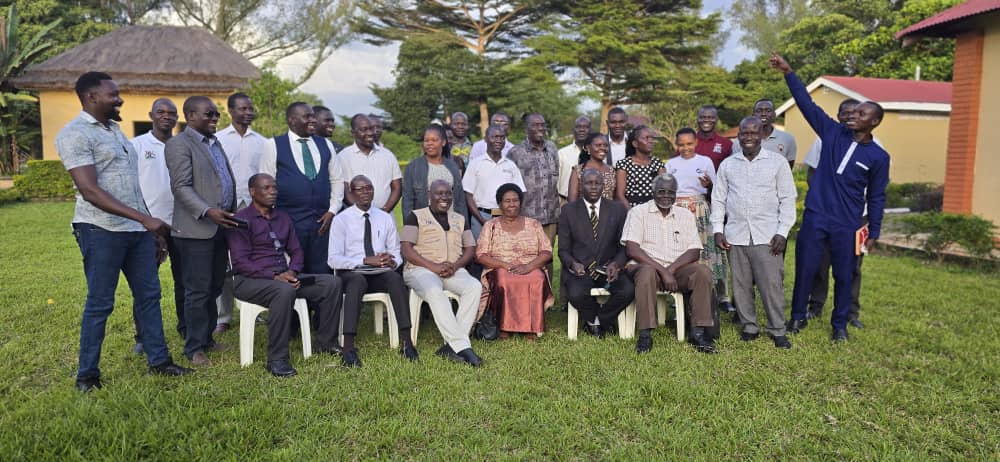
Leaders criticized the bill for prioritizing power consolidation over national pride, failing to clearly define “sovereignty,” unjustly reclassifying citizens abroad as foreigners, promoting ministerial absolutism, and posing significant risks to the economy and individual rights, while calling for its withdrawal and advocating for the protection of genuine self-governance.
By Emmy Delux Alomu
Civil society activists, political and religious leaders in the Teso sub-region have expressed deep concerns over the Protection of Sovereignty Bill 2026, describing it as “a poison poured into a common water source, a threat to us all.”
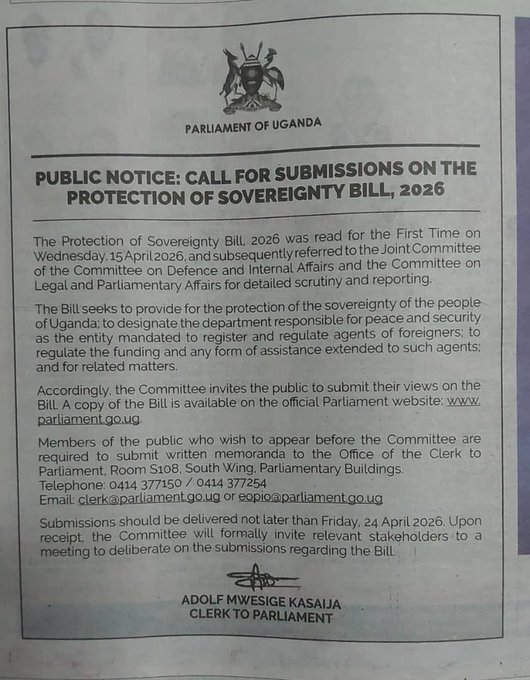
These sentiments were voiced on Tuesday, April 21, 2026, during a press briefing by Teso regional leaders on the implications of the bill that was tabled on April 15, 2026.
Critics view the bill as a significant step toward limiting the activities of civil society organizations, opposition groups, and independent media, drawing unsettling parallels to Russia’s “foreign agent” laws.
Leaders criticized the bill for prioritizing power consolidation over national pride, failing to clearly define “sovereignty,” unjustly reclassifying citizens abroad as foreigners, promoting ministerial absolutism, and posing significant risks to the economy and individual rights, while calling for its withdrawal and advocating for the protection of genuine self-governance.
Benson Ekwee Ocen, Executive Director of the Public Affairs Centre (PAC) Uganda, who delivered this statement during a press conference, suggested that the bill could have focused instead on tracking foreigners entering the country
Cecilia Alupo Engole, executive director of Teso Women’s Peace Activists (TEWPA), warned that the proposed bill could lead to families being torn apart as educated children work abroad, depriving Uganda of essential remittances and undermining the country’s development efforts.
Pascal Amuriat, the deputy president of the Democratic Front (DF) Party in Eastern Uganda, stated that the bill aims to eliminate political parties from participating in government criticism and civil education.
He warned that this bill could lead to more human rights violations as it allows the government to dictate which interests can be represented while restricting the freedom to propose alternative policies and collaborate with international allies.
Cue 220402026 Amuriat-Ateso/Eng
In his part, Rev. Beseri Otekat, the ACT-Forum Uganda coordinator and the dean of students at St. Peters Theological College Soroti, expressed concerns that the problems facing the country may be more spiritual than economic or political.
Cue 220402026 Otekat-Ateso/Eng
Santos Osekeny, chairperson of NGOs and CSOs in Bukedea District, argues that the bill undermines Uganda’s NGO sector by hindering foreign funding and excessively empowering the minister, urging for its dismissal.
Julius Arugu, Project Officer at PAC-Uganda, expressed concerns that the bill lacks clarity regarding the duration required for one to be classified as a foreigner.
He cited inconsistencies with existing laws like the Money Laundering Act and the Constitution, and notes that the definitions of government disruption and the transition period are vague, urging for the bill to be shelved until further consultations with Ugandans can be conducted.
They concluded that it poses a dangerous legislative expansion with no genuine legal gaps to address, yet it threatens their rights, livelihoods, relationships, and overall well-being.
