
By Cindrella Atenyo
Leaders in Kotido District have called for deliberate and sustained interventions to address the worsening food crisis in Karamoja, warning that emergency food relief alone will not prevent communities from sliding deeper into hunger caused by the current prolonged drought.
The leaders say government and development partners should complement food distribution with long-term interventions such as irrigation water, agricultural equipment, kitchen gardens and livelihood support to help households become self-reliant.
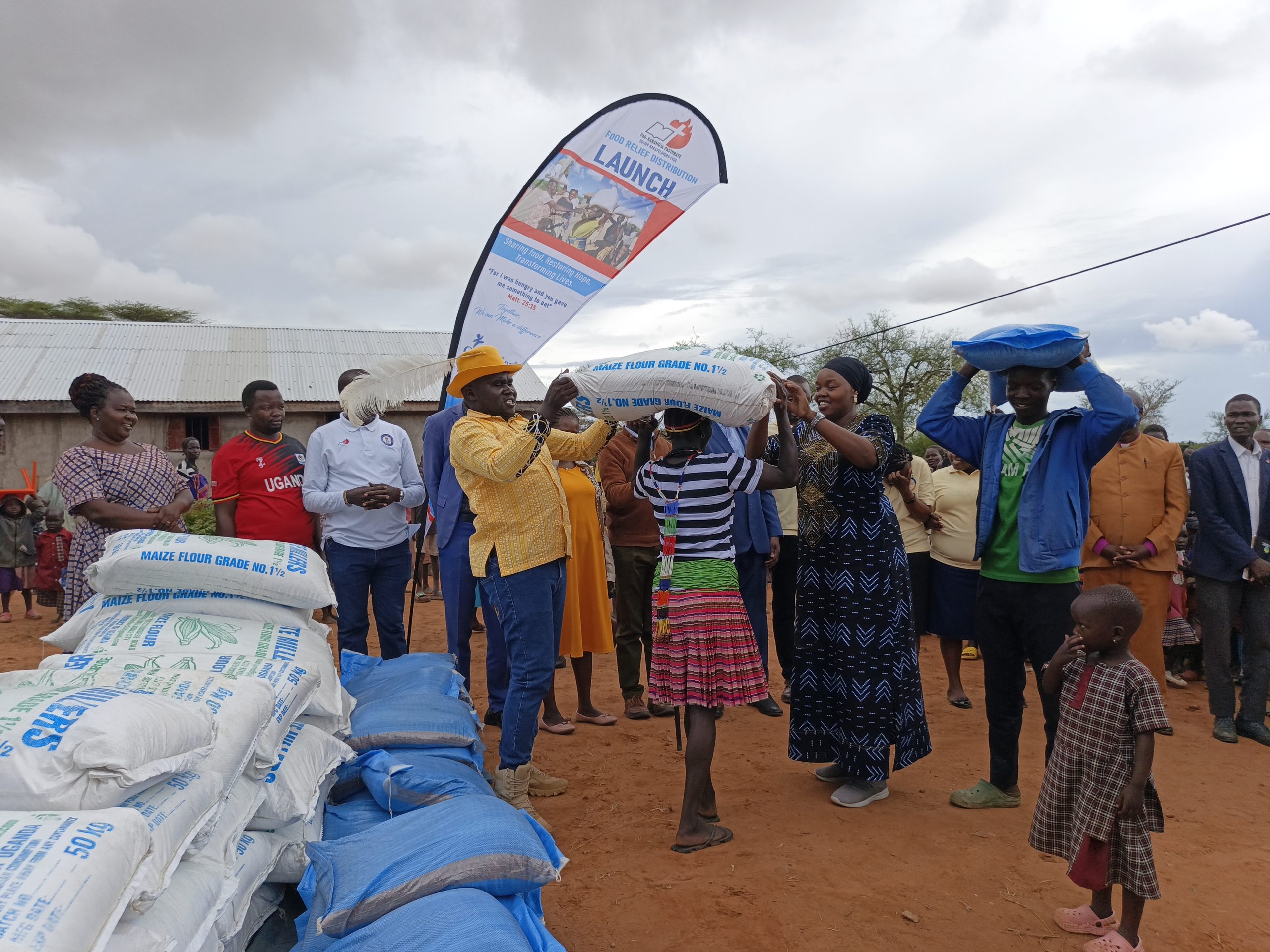
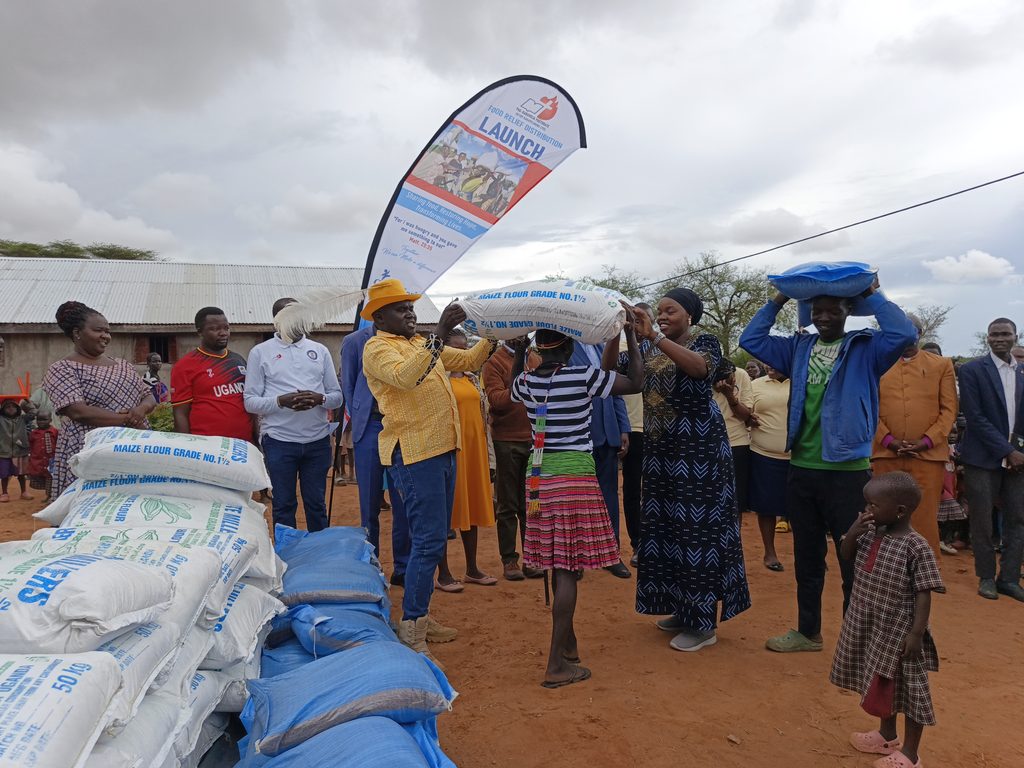
While launching of a Shs6.7 billion food relief campaign by Compassion International Uganda, targeting 11,047 vulnerable households across the region on Friday, November 6, 2026, Kotido Woman Member of Parliament, Nuria Hasfa Teko, said the district urgently needs emergency assistance because some residents are already dying of hunger.
The food relief programme spearheaded by Compassion International Uganda and the Pentecostal Assemblies of God (PAG) was launched at Nakapelimoru Child and Youth Development Centre in Kotido District.
In Kotido, Nakapelimoru Sub-county received food assistance worth Shs140 million for 245 households, while Kotido Central Division had 389 households covered under an allocation of Shs324 million.
Rev Desmy Amadi, who is coordinating the distribution exercise, said each beneficiary household would receive 55 kilograms of posho, 14 kilogrammes of beans and salt, with a second distribution scheduled after two weeks.
He said the intervention would help save lives but emphasised that Karamoja needs sustainable agricultural support to overcome recurrent food shortages.
“This is a relief intervention, but long-term Karamoja needs water to support food production. Today, we have saved lives,” Amadi said.
Ahimbisibwe said the intervention goes beyond providing food, noting that it is intended to protect lives, preserve dignity and restore hope among households affected by hunger.
“The food relief programme falls under the second phase of the Karamoja Integrated Resilience and Adaptation Programme (KIRAP), launched on September 9, 2026”, he remarked.
The phase according to Ahimbiswe expands the programme from four to six Frontline Church Partners and targets 24,000 children, youth and caregivers.
“This effort has been possible through the extraordinary generosity of Compassion International sponsors and donors around the world. The Shs6.7 billion was mobilised in a short time,” Ahimbisibwe said.
He added that the organisation was using churches that had previously partnered with it to implement community projects to ensure the food reached the intended beneficiaries.
While commending Compassion International for the Humanitarian assistance, Nuria Teko said providing agricultural equipment and water for irrigation would enable communities to cultivate larger fields for both subsistence and commercial farming.
She said the Karamoja region had gone more than seven months without rainfall, far exceeding the two to three months normally associated with drought in the sub-region.
“Ordinarily, drought in Karamoja lasts between two and three months. This time, however, the region has gone for more than seven months without rainfall, making the situation severe,” Nuria Teko said.
She said Karamoja had generally experienced two rainy seasons annually over the past 19 years, but this year received rainfall only in March.
Paul Komol Lotee, the Kotido District LCV Chairperson painted a grim picture of the food situation, revealing that all the district’s 19 sub-counties have been affected by hunger, with some families going several days without food.
Komol said all the estimated 45,000 households in the district have been severely affected, warning that the situation could deteriorate further between January and July next year because communities recorded almost no harvest this year.
Many farmers had prepared their gardens and expected to plant in September based on weather forecasts, he said. However, the anticipated rains failed to materialise, leaving farmers facing losses after investing in land preparation and agricultural inputs.
According to Komol, some farmers had used funds from the Parish Development Model (PDM) and personal savings to finance their agricultural activities, only to see their investments threatened by the prolonged dry spell.
The district boss said Karamoja remained highly vulnerable to hunger despite its fertile soils because most households depend on subsistence farming, cultivate small plots and lack adequate facilities to store food.
He appealed to development partners and other well-wishers to intensify mobilisation and extend assistance to all sub-counties to ensure no household is left behind.
The sentiments were echoed by the Kotido Assistant Resident District Commissioner Lokwi Peter Abraham, who spoke on behalf of the RDC and the chairperson of District Security Committee, Charles Ichogor, said the district was relatively peaceful, with food insecurity remaining the major challenge facing communities.
Abraham said the district recorded virtually no harvest this year due to climate change, leaving granaries empty, while the next harvest is not expected until around August next year.
He called for interventions beyond emergency food supplies, including kitchen gardens, nutrition education, livelihood programmes and water for production to help households regain their ability to feed themselves.
