
By Lazaro Apunyo
Residents of Karamoja have decried the high cost of accessing justice services, citing long distances to court stations, inadequate judicial infrastructure and a shortage of judicial officers, which they say continue to deny many communities timely access to justice.
The residents say some districts lack operational courts or State Attorneys, forcing people seeking justice to travel long distances, often at prohibitive costs, to follow up their cases.
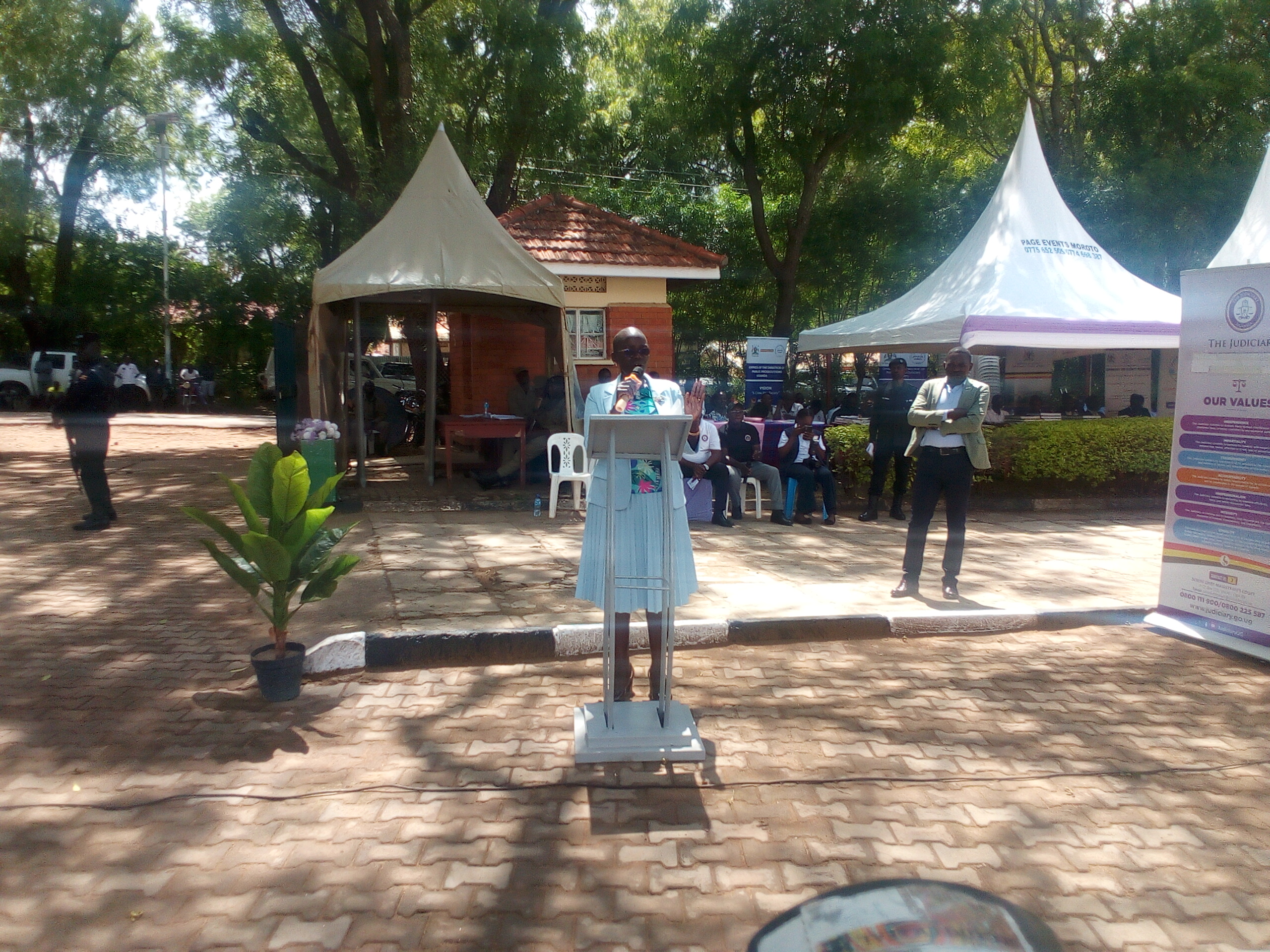
The concerns were raised on Tuesday, November 10, 2026, during a High Court Open Day at Moroto High Court Circuit premises, organised by the Judiciary in partnership with International Justice Mission (IJM) under the theme, “Delivering Inclusive, Efficient and Effective Justice.”
Mike Onyang Kidon, an elder from Moroto District, called for the establishment of an additional High Court circuit in Kotido to serve North Karamoja, comprising Abim, Kotido, Kaabong and Karenga districts.
“The residents from the four districts struggle to follow up their cases at Moroto High Court because of the long distances and high transport costs, with some eventually abandoning their cases”, Kidon added.
He proposed that Moroto High Court serve South Karamoja while a new circuit in Kotido handles cases from the northern districts.
In Napak District, Michael Lopeyon, an elder from Kangole Town Council said residents spend between Shs70,000 and Shs100,000 hiring motorcycles to access the Grade One Magistrate’s Court in Kangole, which is about 80 kilometres from Iriiri, Poron and Apeitolim sub-counties.
Limited access to formal justice, according to Lopeyon has left some residents relying on traditional mechanisms to resolve serious cases, including domestic violence, theft, rape and murder.
In order to address the challenges facing communities across the vast sub-region, he called for the establishment of additional courts, decentralisation of court sessions and improved judicial services.
Jimmy Tebanyang, the Deputy Resident District Commissioner of Nabilatuk, said the district has no operational court despite having a fully furnished court structure, including residential facilities for judicial officers.
“The infrastructure was renovated four years ago, but the Judiciary has yet to operationalise the facility, forcing residents to travel to Nakapiripirit Grade One Magistrate’s Court to pursue cases involving theft, domestic violence and land disputes”, he remarked.
Justice Tom Chemutai, the Resident Judge at Moroto High Court, echoed similar concerns stating that the long distances discourage witnesses from attending court sessions, resulting in delays and, in some cases, the collapse of cases.
He singled out insecurity, poverty, prolonged drought, food insecurity, and poor infrastructure also major hurdles that continue to undermine justice delivery in Karamoja.
Mobile Court Sessions
Responding to the concerns, Principal Judge Jane Frances Abodo proposed introducing mobile court sessions in Karamoja to bring judicial services closer to communities and reduce the financial burden on court users.
Justice Abodo said taking court sessions closer to communities would reduce the financial burden on court users and improve public participation in the justice system.
“Karamoja’s vast geographical coverage, which accounts for approximately 11 per cent of Uganda’s land area, coupled with widespread poverty, makes it particularly suitable for mobile court sessions”, Justice Abodo explained.
She said the Judiciary would discuss how to implement the proposal, explaining that court sessions do not necessarily have to be conducted in permanent buildings.
Abodo added that mobile courts would benefit elderly people and other vulnerable residents who cannot manage long journeys to established court stations.
She also observed that open-air court sessions could help address the intimidation some residents experience when appearing before formal judicial institutions.
The Principal Judge further said Karamoja requires at least three High Court circuits to improve access to justice, noting that residents of North Karamoja currently have to seek some judicial services from Kitgum, outside the sub-region.
She also called for increased community sensitisation on legal rights and stronger collaboration between the Judiciary, police, the Office of the Director of Public Prosecutions, civil society organisations and development partners.
On the growing land disputes in the region, Abodo expressed concern that some educated and influential individuals were taking advantage of communities’ limited literacy levels to fraudulently acquire land.
She said the Judiciary plans to engage community elders to explore ways of addressing the escalating land conflicts and improving access to justice.
