
By Emmy Delux Alomu
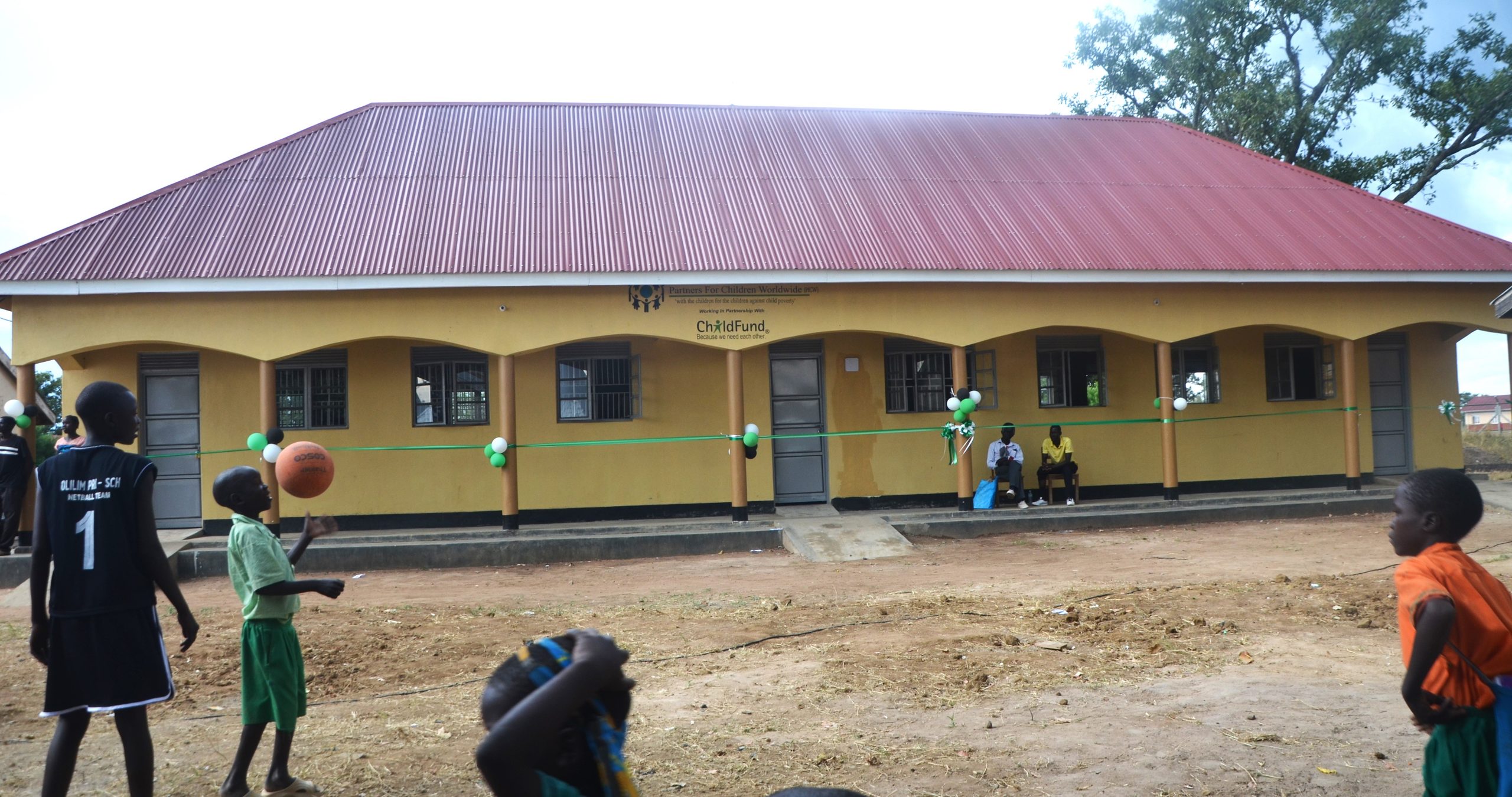
KATAKWI:Olilim Primary School in Palam Sub-county, Katakwi District, has recorded a sharp rise in enrollment following the construction of new facilities worth more than Shs 250 million.
The Catholic-founded government school, established in the early 1960s near the Napak-Karamoja border, previously faced dilapidated classrooms that forced some learners to transfer.
Last year, government constructed a two-classroom block worth Shs 125 million .
This again year, Partners for Children Worldwide, supported by ChildFund International Uganda and Friends of a Child Mary Brenda Akello, invested more than Shs197.7 million in a classroom block, library, girls’ changing rooms, furniture, textbooks, staff facilities, sanitary items and sports equipment.
With funding from ChildFund International Uganda, Plan for Community Welfare (PfCW) has invested more than Sh197.7 million in improving infrastructure and learning conditions at Olilim Primary School.
The investment has supported the construction of a new classroom block, a library and changing rooms for girls, as well as the provision of 21 desks, 24 benches, 12 tables and an assortment of textbooks.
The project also equipped the school with a senior woman teacher’s office and essential accommodation items, including two beds, two mattresses, two chairs and sanitary materials.
In addition, electricity has been extended to the entire school and teachers’ premises, improving the learning environment and creating better conditions for both pupils and staff.
Speaking during the commissioning of the new facilities on Tuesday, Olilim Primary School Headteacher Martin Ocole said the improved infrastructure had already contributed to a sharp rise in pupil enrollment.
“Our enrollment has increased from 454 pupils last year to 742 this term, and the numbers are still rising. This shows that parents are gaining confidence in the school because of the improved learning environment,” Ocole said.
He said the new facilities would improve literacy and numeracy, strengthen teaching and learning, and encourage pupils to participate in co-curricular activities.
“The library will give our learners better access to reading materials, while the new classrooms will reduce congestion. We also expect the facilities for girls to promote dignity, confidence and retention among female learners,” he said.
However, Deputy Headteacher Cornelius Aurumo said the school still faces a shortage of eight teachers, desks for 263 Primary One pupils, staff housing, adequate pit latrines, classroom renovations and fencing.
Moses Opoo, PfCW Project Officer, said the Olilim Primary School project was designed to address both education and household livelihood challenges in the Aakum community.
“Our goal is to create a safe and supportive learning environment where children can develop strong literacy and numeracy skills. At the same time, we are supporting vulnerable households so that poverty does not undermine children’s education,” Opoo said.
He explained that the livelihood component is targeting 60 households through livestock rearing and is being implemented in two phases.
“The livestock component is intended to strengthen household incomes and resilience. When families have better livelihoods, they are more able to support their children’s education and keep them in school,” Opoo said.
He said PfCW expects the combined investment in school infrastructure, learning materials, sports and household livelihoods to contribute to improved educational outcomes and the long-term wellbeing of children in the Aakum community.
District Education Officer Mary Aanyu expressed optimism that the improved facilities will enhance learning, academic performance, library use and menstrual hygiene.
She encouraged parents and guardians to provide meals for their children while at school in order to keep them active during afternoon lessons.
