
By Mathew Abekson and Ferucho Ilukol Apanyamie
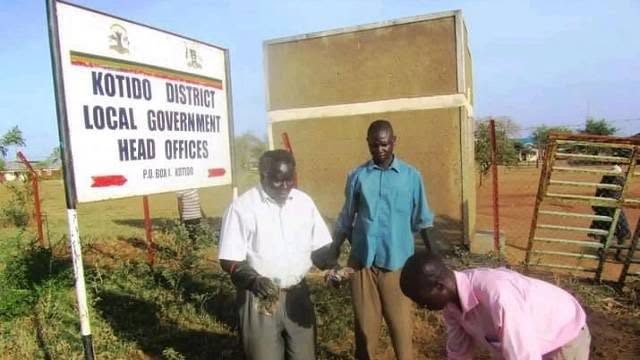
Kotido residents have welcomed a move by municipal authorities to arrest and convict individuals found defecating in open spaces to community service as a measure to improve sanitation and promote public health.
In September, municipal authorities with the police conducted an impromptu operation in common hotspots, where residents practice open defecation leading to the arrest of seven people at Lomusi Akiriket, nearing Kotido police barracks.
Those arrested were Veronica Achilla, Maria Locheng, John Losike, Lowot Lopio, Anyala Apanakori, Moses Lokut, and Lourien Apalomuge.
Speaking during the arrest operation, Kalisto Longole, the Kotido Police Community Liaison Officer, said the arrests followed a directive from the Office of the Resident Commissioner aimed at enforcing proper sanitation and discouraging open defecation in public spaces.
Longole said the operation targeted individuals found defecating in undesignated areas, warning that such practices pose a risk to public health and undermine efforts to maintain cleanliness in Kotido Municipality.
“The operation follows a directive from the Office of the Resident Commissioner to arrest anyone found defecating in public open spaces,” Longole said.
Though the suspects pleaded guilty and asked for pardon, they were on October 6, 2026, arraigned before the Kotido Grade One Magistrate, Rashid Katende.
Out of seven suspects, four were released after paying fine of Shs100,000 each, while three others were sentenced to two months and sent to Kotido government prison after failing to pay a fine.
Among those who were released after paying a fine of Shs100,000 are Veronica Achilla, Maria Locheng, John Losike and Anyala Apamakori were released, while Moses Lokut, Lowot Lopio and Lourien Apalomuge were sentenced to two months.
Speaking to this publication, Alice Lopera, a resident of Umum Cell in West Division, commended the move, saying it would help curb open defecation, which she said has become a growing menace in the area.
“Open defecation has become a growing concern, posing a threat to public health and exposing residents to sanitation-related diseases”, she stated.
She believes that enforcing sanitation measures will encourage community members to maintain clean surroundings and construct proper toilet facilities.
“Strict enforcement of sanitation guidelines will remind residents that keeping their homes and surroundings clean is a shared responsibility”, she remarked.
She however, urged local leaders to sustain the campaign through community sensitisation and regular inspections, saying that enforcement alone may not be enough without public awareness.
John Mark Apaben, a resident of Narengemoru Cell in Central Division, believes that continued arrests and fines would encourage community members to embrace proper sanitation for fear of losing large sums of money, especially during the current drought and hunger season.
Meanwhile, Patrick Ekemem Longoli, the Senior Assistant Town Clerk for Kotido Central Division called on the LCI chairperson to constitute sanitation taskforce to help the municipal law enforcement officers to enforce the operation on open defecation.
He urged residents to embrace proper sanitation practices by using toilets and other designated facilities instead of public spaces, noting that maintaining a clean environment requires cooperation between the authorities and the community.
Ekemem appealed to residents to embrace proper sanitation practices and cooperate with authorities to improve hygiene in their communities, noting that a clean environment is essential in preventing disease outbreaks and protecting the well-being of families.
Kotido Municipality like any other areas in Karamoja Sub-region continues to battle sanitation challenges due to low latrine coverage among households.
Latrine coverage in Kotido Municipality, according to the authorities is approximately 41 per cent, though broader district-level coverage is lower (ranging from 4% to 23% depending on recent reports and specific sub-counties).
