
Addressing journalists on Monday at the Supreme Court in Kampala, Mawanda said the Judiciary had anticipated a surge in election-related disputes and had undertaken capacity-building initiatives to ensure judicial officers are adequately prepared to handle the workload.
Under the Parliamentary Elections Act, the High Court is required to determine parliamentary election petitions within strict timelines, in any case within 30 days after all parties have filed their responses.
By Admin
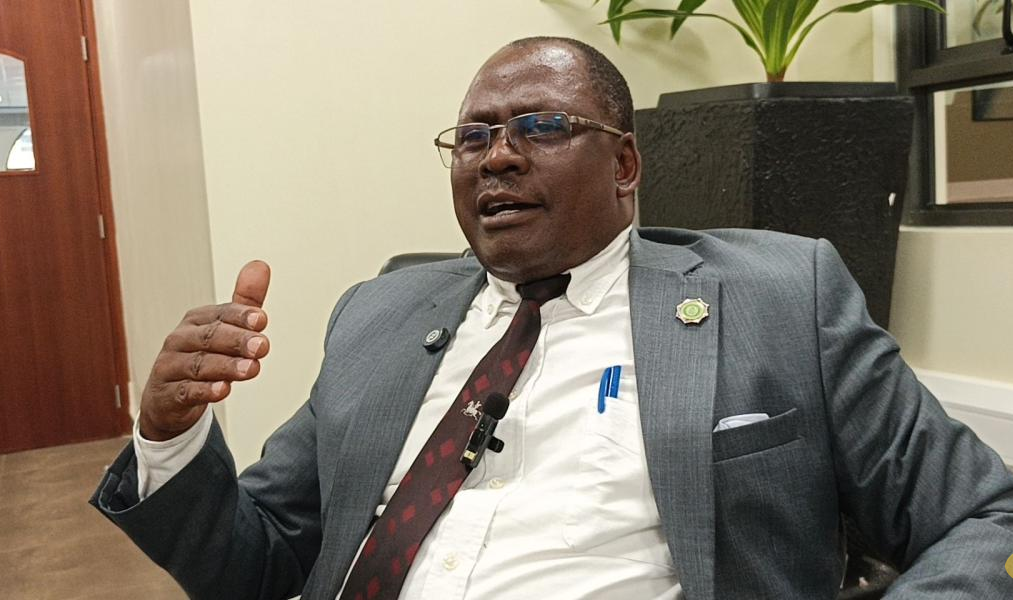
Judiciary Spokesperson James Ereemye Mawanda, has said that the judiciary is set to start hearing 118 election petitions arising from the recently concluded Parliamentary and Local Government Elections of 2026.
Mawanda said the Judiciary has already begun preparations to handle the cases and remains confident that all petitions will be concluded within the legally prescribed six-month period.
Addressing journalists on Monday at the Supreme Court in Kampala, Mawanda said the Judiciary had anticipated a surge in election-related disputes and had undertaken capacity-building initiatives to ensure judicial officers are adequately prepared to handle the workload.
Mawanda revealed that as recently as last week, the Judiciary conducted training sessions for Justices of the Court of Appeal, which is expected to handle appeals arising from election petition rulings.
“We have continued to prepare ourselves. We have now ascertained the number of files and are in the process of allocating the necessary resources to handle these matters,” Mawanda said.
He said the process of resource allocation is ongoing and hearings of the petitions are expected to commence soon.
“I want to assure Ugandans that we are still within time. We shall ensure that we beat the deadline of six months within which these matters are supposed to be concluded,” he said.
Mawanda appealed to the public to remain calm and support the Judiciary in fulfilling its constitutional mandate of resolving election disputes.
He also disclosed that the Principal Judge, Lady Justice Jane Frances Abodo, has already initiated the deployment of judges across the country to ensure effective handling of the cases.
According to Mawanda, judicial officers will be assigned based on operational needs and caseloads rather than external considerations.
“The fears that judicial officers are sent to specific places for specific reasons are unfounded. The only reason for these deployments is the adjudication of cases.
These are judicial officers who have taken oaths to administer justice without fear, favour, affection or ill will,” he said.
He urged parties dissatisfied with court decisions to use the available appellate mechanisms rather than speculate about the integrity of judicial proceedings.
Addressing concerns about alleged delays in hearing election petitions, Mawanda dismissed the claims, saying the Judiciary is following established procedures that include planning, resource allocation, deployment of personnel, and scheduling of hearings.
“There is no delay. We plan, allocate resources, deploy, and then execute. It is a process with several steps. We are soon commencing the hearings because it is our mandate and our responsibility to handle these matters,” he said.
Mawanda reiterated that there is no cause for alarm regarding statutory timelines. “The biggest worry seems to be rumours that time is running out.
Time is not running out. We are committed to ensuring that all these matters are handled within the prescribed six months,” he added.
On the geographical distribution of the petitions, Mawanda said the Masaka region recorded the highest number of election petitions, while some areas, such as Bushenyi, did not register any petition.
He noted that the trend reflects citizens actively exercising their constitutional right to challenge election outcomes in court where they believe there are grounds to do so.
Among the notable cases arising from the January 15, 2026, parliamentary elections is a petition filed by musician-turned-politician Hillary Innocent Kiyaga, popularly known as Dr. Hilderman of the opposition National Unity Platform (NUP).
Dr. Hilderman, the incumbent MP for Mawokota North, is challenging the victory of former Trade and Cooperatives Minister Amelia Kyambadde together with the Electoral Commission.
In western Uganda, incumbent MP Mwesigwa Robert Rukaari has filed a petition against businessman-turned-politician Christopher Bakashaba and the Electoral Commission at the High Court in Mbarara.
In eastern Uganda, incumbent MP Sarah Opendi Achieng is contesting the election of Angella Akoth, with the Electoral Commission also listed as a respondent in the case before the High Court in Tororo.Similarly, Birungi Kobusingye has petitioned against NUP’s Harriet Nakwedde and the Electoral Commission in a case filed at the High Court in Mukono over the Kayunga District Woman MP results.
In the Masaka High Court circuit, Rose Nalubowa is challenging the victory of NRM’s Justine Nameere as City Woman MP, while Muwonge Nkoko is challenging the election of incumbent Lwengo District Woman MP Cissy Namujju Dionizia, with the Electoral Commission named as a co-respondent. Ruth Katushabe’s victory as Bukomansimbi District Woman MP is also being challenged by Grace Nalubega.
In Ssembabule, incumbent Woman MP Mary Begumisa is challenging the victory of Florence Nambazira.
Other cases include a petition challenging the victory of State Minister Esther Davinia Anyakun in Moroto High Court, filed by Lilly Lapowa.
The Electoral Commission’s status report on the 2026 election petitions lists numerous petitioners contesting results against declared candidates and, in some cases, returning officers. Several constituencies have registered multiple petitions, reflecting closely contested races and continued dissatisfaction with electoral outcomes.
Masaka and Moroto High Court circuits are handling a significant portion of the cases, with Iganga and Lira also managing multiple petitions against candidates and election officials.
Key issues raised include alleged electoral malpractice, disputes over vote tallying, candidate nomination concerns, and accusations of irregularities involving returning officers.
Under the Parliamentary Elections Act, the High Court is required to determine parliamentary election petitions within strict timelines, in any case within 30 days after all parties have filed their responses.
Most petitioners are seeking by-elections in their constituencies, while others are seeking the nullification of results and declaration as rightful winners.
The Judiciary is expected to release hearing schedules for the petitions once ongoing administrative preparations are completed.
Following the 2021 general elections, the Judiciary registered 160 petitions at parliamentary and local council levels, including 102 against Members of Parliament, 49 against Local Council chairpersons, and nine election applications.
These cases were then handled by 32 judges within the prescribed timelines.
SOURCE:URN
Do you have any story you want to share with us?, Please email us on eetoilnewsdesk@gmail.com or call or send SMS to +256-776-467-336, WhatsApp +256-770-450-528
