
By Hellen Aguyo Okello
In Uganda’s manufacturing and processing industry (Q-Mark) is a “make or break” factor for consumer trust.
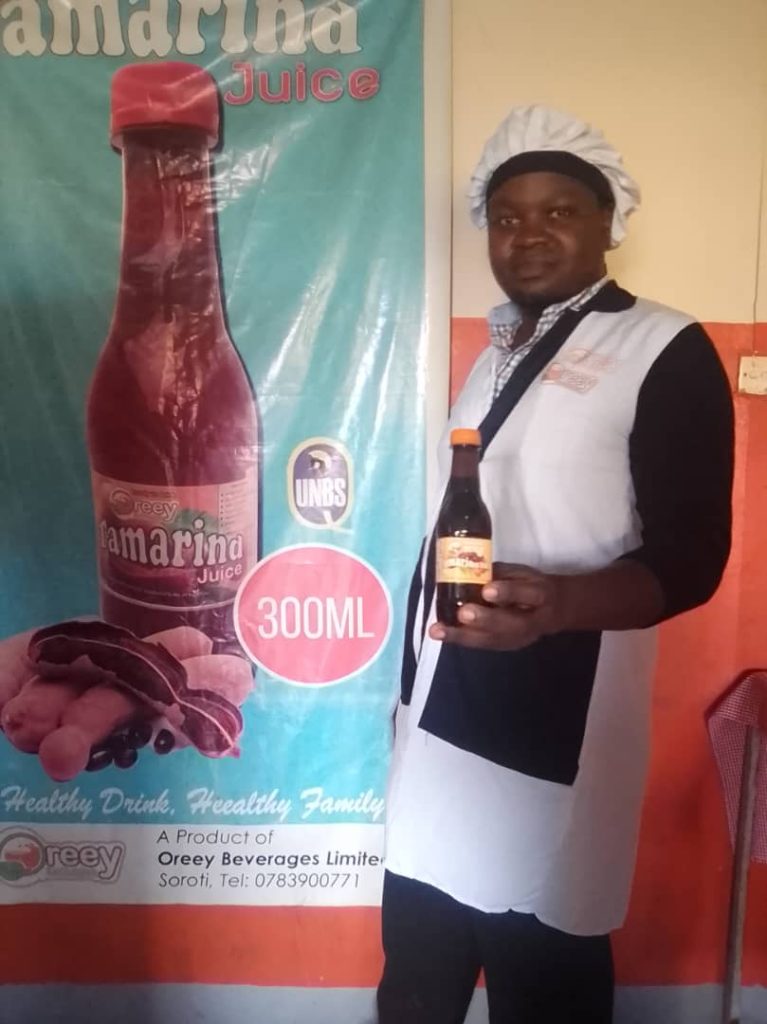
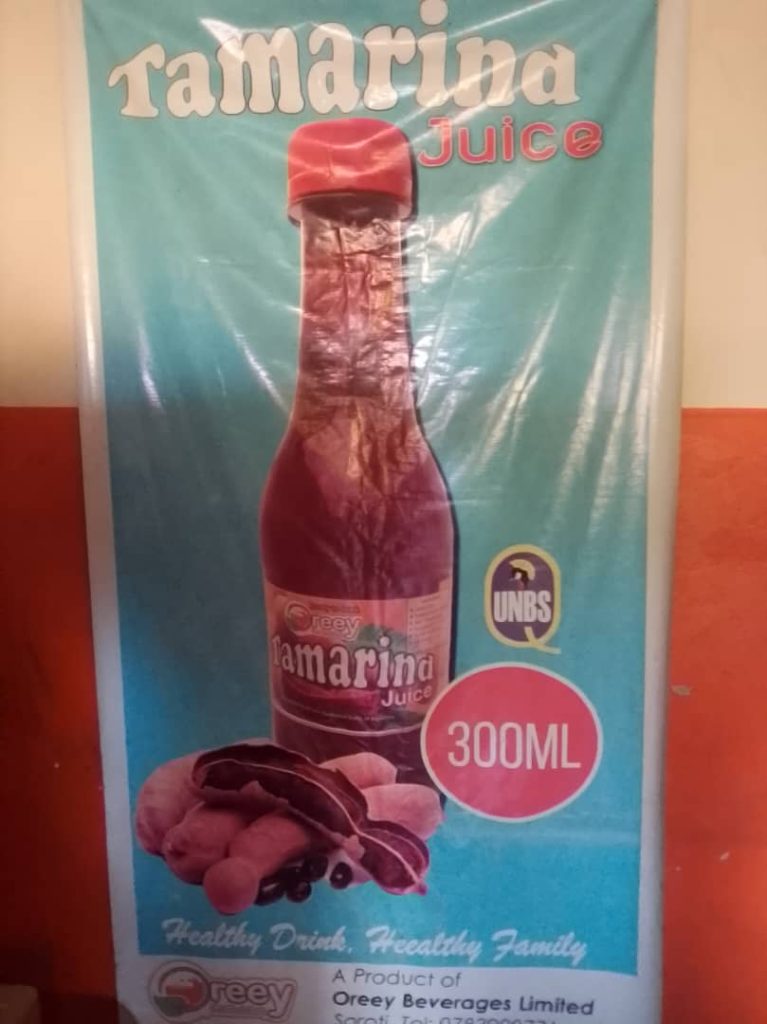
Award of the prestigious Q-Mark by the Uganda National Bureau of Standards (UNBS) on Oreey Tamarind juice has made the product enormously capture the local market and drawn the urgent attention of major national and international manufacturers.
This is the first Tamarind product to be awarded the Q-Mark in Uganda after meeting all the rigorous safety and quality standards required for large-scale commercial distribution.
Oreey Tamarind juice, is one of the products manufactured by Oreey beverages limited located in Oderai cell, Oderai ward in Soroti city West division, Soroti City.
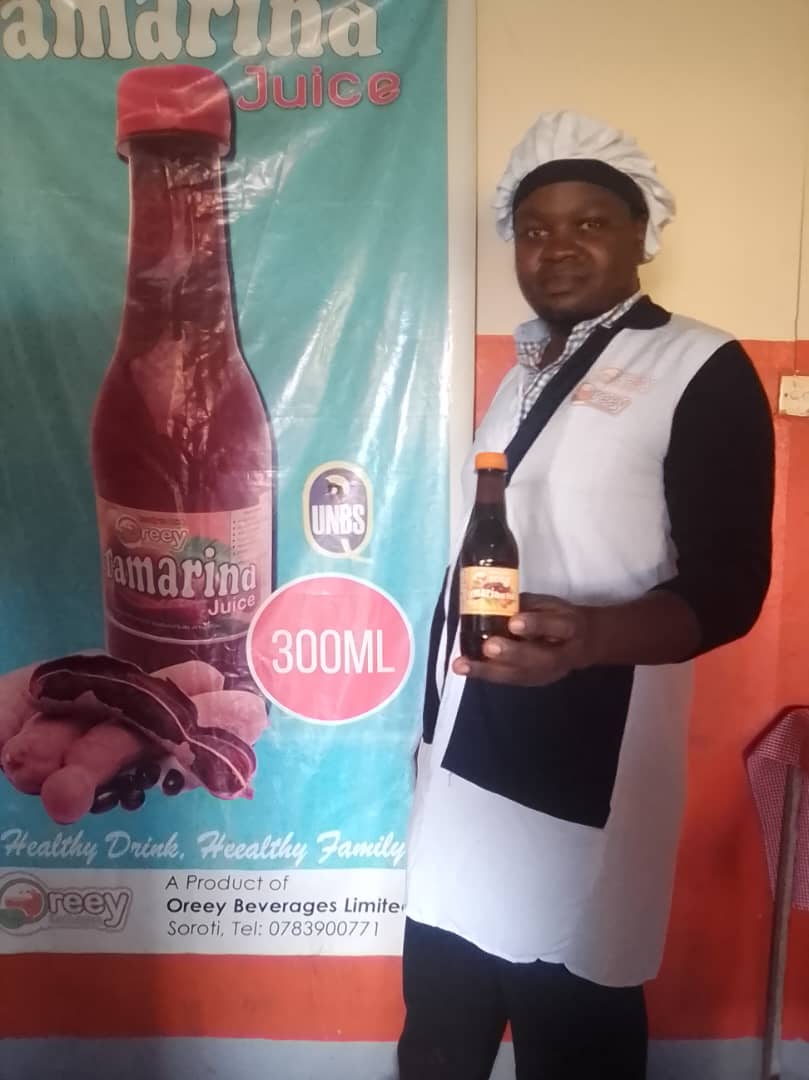
Oreey beverages limited is owned by Stephen Obore, a degree holder in Food Science and Technology from Kyambogo University.
Obore says processing of Tamarind juice was an enterprise university project he presented while at pursuing his Bachelor’s degree, little did he know that what started as a backyard school project would be a hot cake in the community and later spark global competition.
He would move around with his locally processed tamarind juice to a few of his friends and by evening all he had parked in his back would be sold.
The juice would be parked in any clean empty bottle around or some customers would give him their personal juice containers to park for them the juice and deliver the next morning as he reports for work.
In a twinkle of an eye, the entire neighborhood was asking to test Obore’s Tamarind juice including shop keepers around.
He started increasing his capacity of production and the questions of Q-Mark came in.
Approaching supermarkets and big shops with a new juice flavor became a problem, “Besides being new in the market, where is the Q-Mark?” became the question of the day and his product would be pushed away.
Certification journey
After supermarkets rejected his products due to lack of quality mark (QM), Obore embarked on research about certification process, he visited Uhuru beverages limited in Kampala, owned by one of his friend’s where he was taken through the certification process.
Following study tour Uhuru beverages limited, Obore visited UNBS head office in Kampala, where he was further sensitized on Standards, Quality and Metrology by UNBS staff whom he found at the office.
He bought the Good Manufacturing Practices (GMP) fruits standards and went back to reorganize his premises to meet the required standards and an audit date was scheduled by UNBS.
In September, 20219, a team of UNBS officials visited the premises and he was so nervous seeing them arrive, he thought they would be very tough on him or questions a lot, but to his surprise it was all smiles and approvals as the audit went on well though he was given some areas for improvement.
On December 1 2019, he received an email from UNBS notifying him that his product was certified and that was a total sigh of relief and an end to job search to-date.
“The celebration was overwhelming and it was worth it because the Q-Mark became the key to open doors to all markets,” said Obore.
Market expands
One single first time Q-Mark on Oreey Tamarind juice, shook the fruit processors because this new drink was rocking the markets.
This increased production from 10 litres before certification to 1000 litres daily after acquisition of quality mark (QM), workers increased from 2 to 12 and all on full time basis and this was a boom on their sales as well.
The entry of a high-quality, locally sourced alternative Oreey Tamarind juice forced established international brands to rethink their regional portfolios.
The certification of this tamarind juice became testament to the growth of Ugandan agro-processing.
Today, over 20 Global Brands are Chasing Uganda’s first Certified Tamarind Juice.
These include Riham exotic Tamarind Juice, Ona Tamarind juice, Valley Tamarind juice and wine, Tropical Tamarind, Splash Britania Tamarind to mention but a few.
There is also increased online content creation about Tamarind juice production, health benefits and nutrition.
Suzan Apolot from Opiai B in Soroti city an ardent consumer of Oreey Tamarind says the drink is reach in vitamins and acts as a natural digestive aid for constipation.
Meanwhile Betty Amaro a staff member at Oreey beverages decries the back-and-forth movement in a bid to renew certification of products.
This has globally increased the value of Tamarind which used to be an overlooked wild fruit from Shs 400 to Shs3000 per kilogram in the Ugandan market and it has become one of the money maker fruit trees in families in Uganda.
Besides the challenge of stiff competition in the market due to influx of innovations on Tamarind, Obore also reports the challenge of UNBS operating on a single fruits’ standard parameter.
He notes with concern that, Tamarind fruit is high in acidity, has low sugar content and high PH level compared to other fruits graded together with it in the same UNBS fruits standard.
Obore suggests that the regulatory body would device a separate standard for certain unique fruits like Tamarind because balancing the acidity, PH and sugar levels, according to the current standard is cumbersome.
He also proposes that government to collaborates with National Environment Authority and Uganda Revenue Authority together with Uganda National Bureau of Standards to come up with a consolidated bare minimum standard for small and medium enterprises in Uganda.
Obore laments that making small scale producers to meet the same fruits standards is unfair.
According to him, understanding these standards in English language for the local producers is difficult but rather having them translated into local regional languages would be of great importance to illiterate processors.
UNBS’ response
However, according to UNBS’ senior public relations officer Victoria Namute, one of the areas of key focus for UNBS is improving systems processes, creating more awareness and publicity where the issue of translation of standards to local languages, consolidation of minimum standards among others is being worked on by the authority.
Meanwhile Pius Woniala who heads the Micro-Biology laboratory in Mbale says sometimes it is the manufacturers who make the certification process complex because they reluctantly delay covering up their non -compliance conformities.
He says the auditors cannot issue approval report for any certification when the enterprise has not full-filled all the compliance requirements.
