
By Alexander Mackey Okori
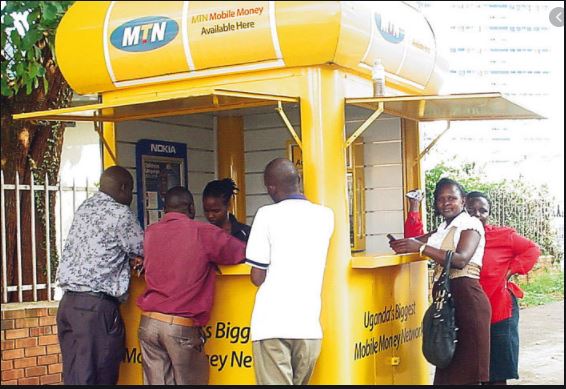
Mobile money users in Kotido District have alarmed over high mobile money withdrawal charges, arguing that the levies disproportionately affect low-income users and discourage the use of digital financial services.
They raised this to Bank of Uganda officials during a one-hour radio talk show on Etoil A Karamoja, hosted by Tito Lowanyanga, popularly known as Apalatwalakori.
In 2018, government slashed tax on all mobile money withdrawals to 0.5 percent down from initial 1 percent following a massive public outcry and a significant drop in transaction volumes.
Despite this reduction, mobile money users continue to advocate for the tax to be abolished entirely, arguing that even the current rate becomes expensive for high-value transactions and continues to hinder digital adoption and economic growth.
They also expressed dissatisfaction with high mobile money withdrawal charges, which they consider as a major financial burden.
For instance, MTN-Uganda, currently levies a minimum of Shs330 for withdrawing between Shs500 and Shs2,500 and a maximum of Shs20,000 for withdrawal transaction of between Shs4,000,000 and Shs7,000,000
Airtel charges a minimum fee of Shs 330 for withdrawals between Shs 0 and 2,500 and a maximum of Shs18,000 for transactions between Shs2,000,00 and 5,000,000.
The tax on mobile money transaction is 0.5 percent on withdrawals. It means that if you are withdrawing 100,000 the tax charge is shs500 and shs10,000 it is shs50. On every mobile money transaction, there is a cost of 10 percent meaning if withdrawing shs10,000 there is shs1000 on withdraw and only shs50 is tax and shs950 is the charge which goes to the service provider.
However, the members of the public have complained and asked government to consider lowering money transfer charges, which they say are adding to costs of receiving money.
They argue that these charges double the applicable rate in Kenya and Tanzania if the local Shilling rates are converted into US Dollar terms, calling on Bank of Uganda to intervene and cap the charges.
“Taxing cash withdrawals may unintentionally discourage the use of formal financial systems and push consumers toward informal channels. This shift could threaten economic growth and development by impeding the integration of more people into the formal economy and limiting access to regulated financial services”, said Paulo Lomilo.
In response, Bank of Uganda team leader, financial innovation, Tonny Maliisa said that they are engaging the telecom service providers to lower the charges.
“We are asking them (service providers) that in order to promote financial inclusion and facilitate our people in the countryside to access financial services, is there a way this financial cost can be brought further down? I don’t want an impression that the mobile money charges are high solely because of the tax. It is not true. The tax charge only applies to withdraw. If I transfer money from your phone to the other, there is no charge. If you transfer electronically throughout the value chain, there is no tax anywhere,” Maliisa said.
According to Bank of Uganda, Uganda has solidified it’s position has the second fastest growing mobile money maker in Sub-Saharan Africa, a development at is significantly expanding financial inclusion across the country.
In its quarterly financial stability report review for March 2025, the central bank reported remarkable 166 percent increase in active mobile money accounts, reaching 33.7 million users nationwide while transactions volumes and values also rose sharply by 20.9 percent and 25.5 percent, respectively.
A substantial 92.2 percent of mobile money transactions, were low value, under Shs50000, underscoring the platform’s role in broadening access to basic financial services.
