
By Alexander Mackey Okori
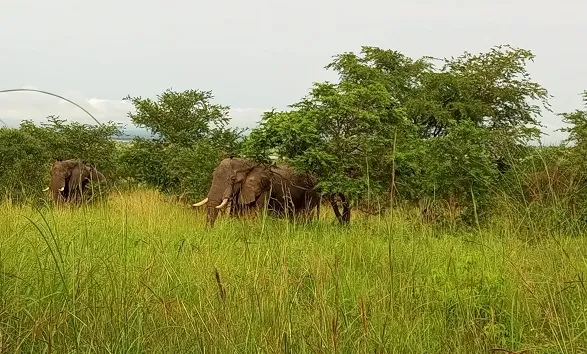
Karenga district leaders have demanded urgent government action to persistent cases of human-wildlife conflict following a series of deadly elephant attacks that have left many families grieving.
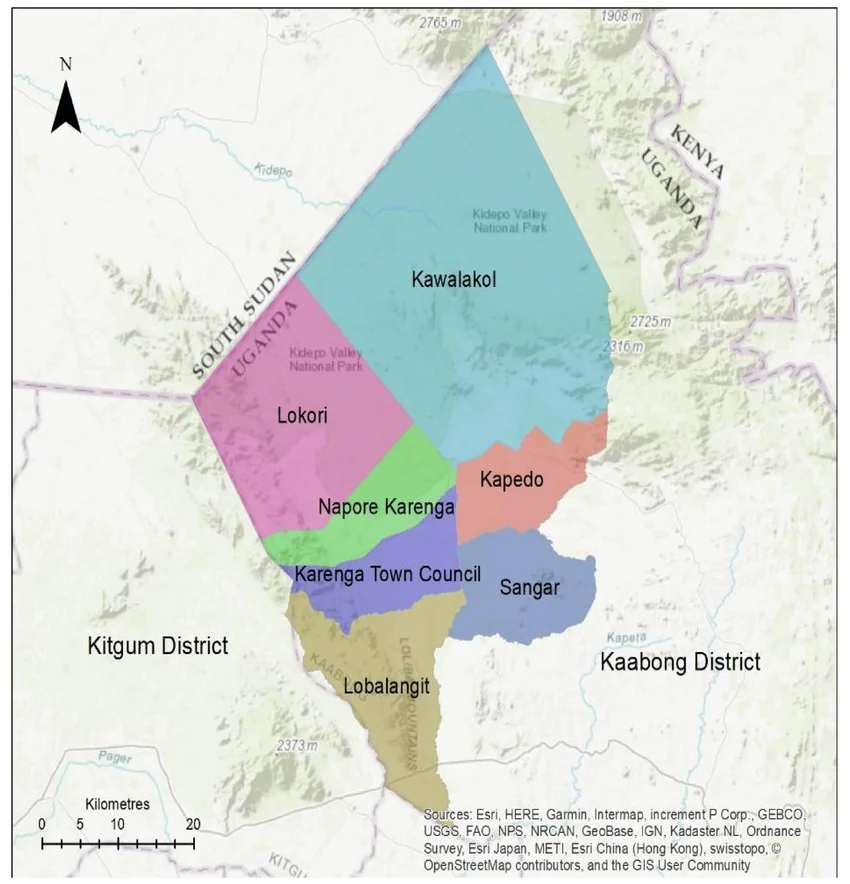
The most Sub-Counties of Kapedo, Naopore, Lobalangit, Kakwanga, Sangar, Karenga, Kawalakol, and Lokori, are the most affected areas due to their proximity to Kidepo Valley National Park.
The leaders say that several people have died and others are nursing serious injuries in the hospitals after being attacked by the marauding beasts from Kidepo Valley National Park.
The most recent incident occurred on Thursday, July 23, 2026, when 30-year-old Lolemu Mzee, a resident of Lopet village, Sarachom Parish in Lobalangit Sub-county was attacked and killed by a stray elephant.
Denis Ilukol Lokuda, the LCIII Chairperson of Lobalangit Sub-county said the deceased had gone to check on his maize garden in Kachom village, when he was reportedly attacked by an enraged elephant at around 5:00 p.m.
According to Ilukol, Lolemu’s lifeless body was found the following morning by the locals and was taken to Karenga Karenga Health Centre IV by a team of police and UPDF soldiers for postmortem examination, pending burial today.
Despite the park being a key source of revenue for the district and government, Genesis Abara, the LCIII Chairperson of Kakwanga Sub-county, said the elephants and buffaloes have caused more harm than good.
“I have recorded a series of complaints of elephants crossing from the park to destroy people’s crops. Some have been killed and farmers have stopped going to their gardens for fear of being attacked by marauding elephants,” Abara stated.
Meanwhile Paul Lopeyok, the LCV Chairperson for Karenga district said that Lolemu was the fifth person to be killed by elephants in the area since the beginning of this year.
However, this claim could not be independently made by this publication by the time of filing this story.
“Several people died instantly, while others died while receiving treatment in hospitals. As leaders we have reported numerous incidents of stray elephants and buffaloes to Uganda Wildlife Authority (UWA), but the officials tell us to encourage locals to coexist with wildlife,” said Lopeyok.
He attributed the rampant invasion of elephants to ongoing prolonged drought, which forced them out of the park to the neighbouring communities in search of water and pasture.
“The drought that set in mid-May and has persisted has disrupted wildlife habitat pushing them into the nearby village where they destroy people’s property and kill people”, Lopoyok added.
He appealed to the government to expedite the construction of an electric fence around Kidepo Valley National park.
When contacted one of the rangers who spoke to this publication on anonymity because he is not allowed to talk to the press acknowledged the invasion of elephants in the area.
He said that they were working with the community members to drive back the elephants to the park.
However, he cautioned the public against attacking elephants whenever they are spotted in the area, pointing out that doing so causes the animals to become enraged and attack.
