
Alexander Mackey Okori
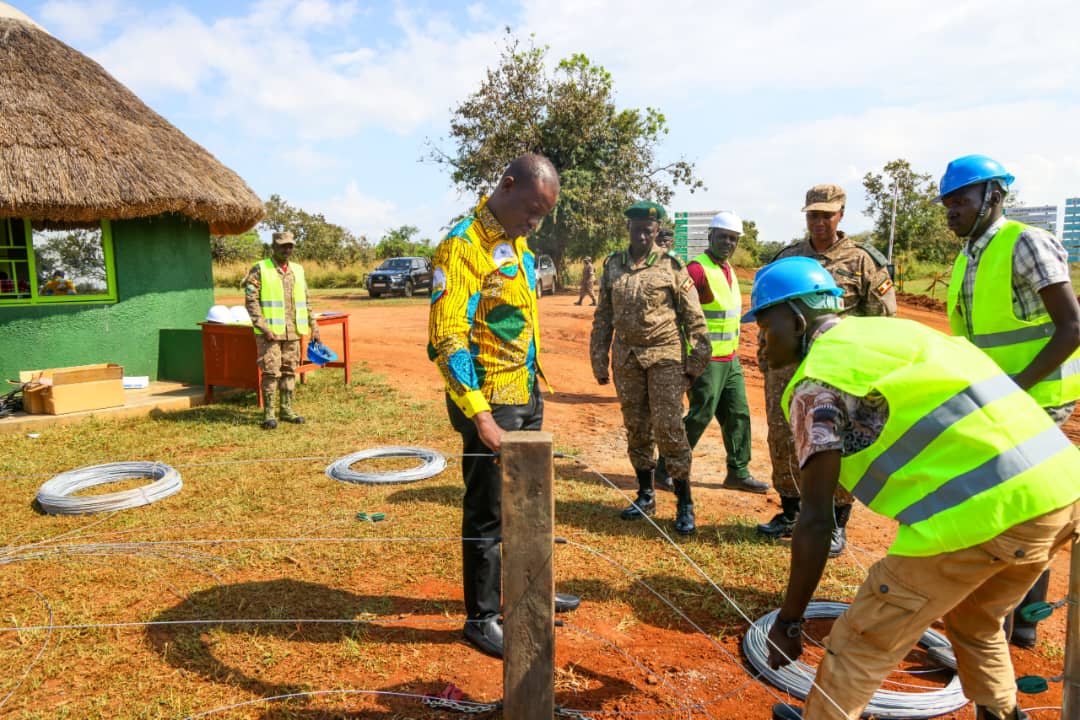
Government through the Uganda Wildlife Authority (UWA), has commenced the construction electric fence around Kidepo National Valley Park in Karenga district in an effort to prevent wild animals especially elephants, from entering people’s homes and farms.
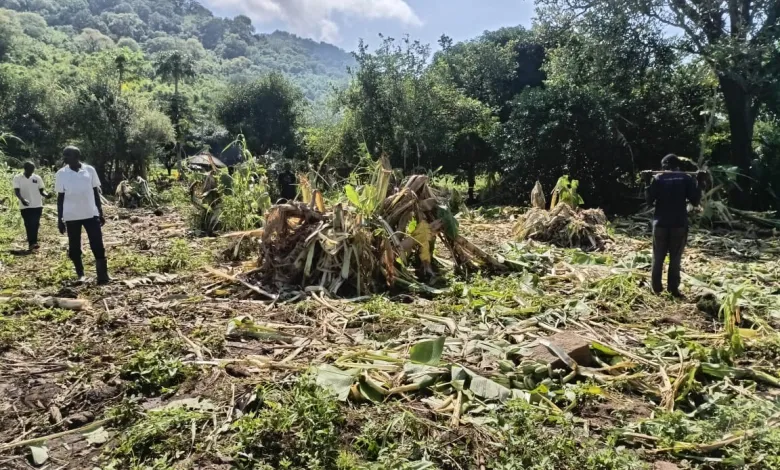
The animals have over decades, wreaked havoc on people’s gardens destroying crops and claiming lives especially in the districts of Karenga, Kaabong, Kotido and Nwoya which are bordering the game park.
Over the years, people and leaders have raised concerns about the invasion of elephants and have been demanding for the installation of an electric fence to curtain wild life animals from crossing.
Minister of State for Tourism, Wildlife and Antiquities, Martin Mugarra Bahinduka, said that the construction of an electric fence around Kidepo National Valley Park is a significant milestone in the country’s conservation strategy.
According to Mugarra, the 100-kilometre Phase One project is designed to protect farmlands and settlements near the park from destructive wildlife incursions while safeguarding endangered species within the reserve.
He said that the project is very important because it protects both people and even the animals.
“The fence will help reduce loss of lives, protect gardens, and bring peace between the people and wildlife”, Mugarra explained.
Mugarra commended the community for their active involvement in the construction process, noting that community participation is crucial for the project’s sustainability.
Stella Napeyok, Perepetua Iwokot, a farmer in Loteruo village in Sidok sub county, Kaabong district expressed excitement, saying since they now see the construction going on, they are optimistic that there will be reduction in their destruction of their crops by the marauding elephants and other animals from the park.
“Once the installation of the electric fence is complete, we shall now be able to focus on food production”, said Napeyok.
Peter Abach, the Karenga sub-county LCIII chairperson told this website that as leaders they are excited to see the electric fence being erected.
He said that for years, the elephants have destroyed crops leaving people with nothing to feed on.
“We are optimistic that once the fence is fully installed, farmers will be finally be able to concentrate on farming without and fear. This is a big relief to the people of Karenga”, he stated.
According to Abach, the elephants have for years invade people’s homes and gardens daily, particularly the areas near the park, causing a huge destruction and marking it impossible for the farmers to make a living.
Genesis of the electric fence project
In April 2024, President Yoweri Museveni directed Uganda Wildlife Authority (UWA) to start constructing an electric fence around Kidepo Valley National Park to solve human-wildlife conflict.
President Museveni said putting up an electric fence along the community land and the conservation area will curb the human-wildlife problems.
Museveni noted that the fence will act as a barrier since it can prevent wild animals from straying into community farmlands.
The President’s directive follows numerous complaints of wildlife invasion into community farmlands.
He made the directive in Kitgum Municipality during the thanksgiving ceremony organized by the Kitgum District Woman Member of Parliament, Lillian Aber. Aber is also the State Minister for Relief, Disaster Preparedness and Refugees.
The President stressed that without the fence, problem animals will continue to stray into the community.
It’s against this background that Uganda Wildlife Authority has a taken a significant step to install an electric fence around Kidepo National Valley Park.
Similar electric fencing initiatives have been implemented in other conservation zones, including Kwale County, where authorities report a notable reduction in wildlife incursions and improved relations between park management and surrounding communities.
The government has also pledged to continue partnering with local communities and conservation stakeholders to mitigate these conflicts and strengthen wildlife protection efforts.
Compensation Woes.
Despite the ongoing installation of electric fence farmers whose crops were destroyed in 2024, are still crying foul over delayed compensation.
In December 2024, President Yoweri Kaguta Museveni, while addressing the media at State Lodge in Morulinga , Napak District, promised that the government would compensate farmers for destroyed crops and install electric fences around protected areas to prevent further wildlife incursions.
However, a year later, farmers say the situation has worsened, with no tangible progress made on the promised mitigation measures.
Robert Okello, a farmer in Lobongia Sub County, said their repeated pleas for compensation have gone unanswered.
“All our calls for compensation have gone unanswered. We now demand the government to prevent further invasion of these animals so we can grow our food. The good thing is we still have our land and the rain,” Okello lamented.
He added that despite earlier promises to fence off the game park, wild animals continue to invade human settlements, frustrating their efforts to grow food and earn a living.
Isaac Lomokol, another farmer, described how persistent raids by elephants and buffaloes have left him in financial distress.
“The damage doesn’t only lead to food insecurity but also economic hardship. I now can’t afford to educate my children or pay household bills,” Lomokol said.
Christopher Lolem, the LC3 Chairperson of Lobongia Sub County in Kaabong District, revealed that elephants recently destroyed several gardens in Nakwale Village. “You know, elephants behave like human beings.
“We have registered over 560 affected farmers for compensation, but so far only one person was contacted to open a bank account, and even then, no money has been received,” Lolem said.
He added that the government had promised to install an electric fence, but nothing has been done.
The farmers’ renewed appeal comes as the country prepares for the 2026 general elections, with concerns mounting over food security and rural livelihoods in the Karamoja sub-region.
Uganda Wildlife Authority Response
Richard Muhabwe, the chief warden of Kidepo Valley Park acknowledged the ongoing challenges and said the government is working on a permanent solution.
“It’s true that wild animals have been invading people’s gardens during harvest, destroying everything”, the government has taken note and is in the process of compensating the affected farmers,” he said.
Muhabwe noted that compensation is being rolled out in phases, and embrace the ongoing installation of an electric fence project.
