
By Bondry Kilenga
The authorities in Kotido Municipality are struggling to recover Shs 49,569,000 million various Savings and Credit Cooperative Societies (SACCOs) under Emyooga program.
Emyooga is a presidential initiative launched in August 2019 to transform 68 percent of homesteads from subsistence to market-oriented production by fostering job creation and improving household incomes.
In the financial year, 2021/2022, Kotido Municipality received Shs 560 million from government through Microfinance Support Centre disbursed.
The money was disbursed to 18 specialised categories including; mechanics, tailors, welder, carpetenters, Saloon Operators, Journalists, Boda-boda riders, Taxi Operators, Restaurant owners and Produce dealers.
Other categories are Youth Leaders, Women Entrepreneurs, Persons with Disabilities (PWDs), and Veterans (including Widows and Orphans), Fishermen, Market Vendors, and Elected Leaders.
According to the allocations each, benefiting SACCOs received Shs 30 million a revolving fund payable within a grace period of one year.
Despite being revolving funds, some beneficiaries have deliberately failed to fulfill their loan obligation.
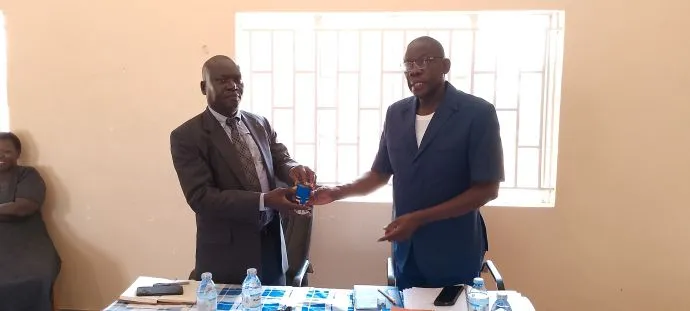
Speaking during his handover ceremony last week, the former Town Clerk of Kotido Municipality, Emmanuel Okaja, disclosed that the recovery rate of Emyooga funds remains very low.
He said that the recovery rate stood at Shs 6,431,000 out of the total disbursement of Shs 560 million, while Sacco savings stood at Shs 30,910,000 by Friday January 6, 2026.
Okaja explained that this stark disparity highlights a significant shortfall in achieving the government’s objective of uplifting local economies through the initiative.
“The low recovery rate indicates that a large portion of the seed capital remains unrecovered,” Okaja said. “This situation not only hampers the Emyooga initiative but also undermines the economic growth such program are intended to foster.”
Okaja’s concerns were echoed by John Lukooki Magezi, the Deputy Resident District Commissioner (RDC) for Kotido, who cited the involvement of “ghost members” in the SACCOs as a major contributor to the poor recovery rates.
During a recent meeting with leaders of various Emyooga SACCOs, some admitted they felt pressured into including civil servants as members, many of whom allegedly lacked genuine commitment to the groups’ objectives.
“It was alarming to see rightful members sidelined as signatories, leaving much of the decision-making power in the hands of individuals without a vested interest in the program’s success,” said one SACCO leader, who requested anonymity.
While the challenges facing the Emyooga program have sparked considerable concern, some local leaders are calling for a strategic shift.
Okaja stressed the importance of drawing lessons from similar initiatives, such as the Uganda Women Entrepreneurship Program (UWEP) and the Youth Livelihood Program (YLP), which have reportedly achieved better recovery rates. “We need to adopt best practices from these programs to strengthen the recovery of Emyooga funds,” he suggested.
However, it remains unclear whether the local government will implement effective measures to address the current shortcomings.
Community confidence in the Emyooga initiative appears to be wavering, with many questioning the program’s integrity amid allegations of mismanagement and ghost membership.
Magezi emphasised that the success of Emyooga extends beyond financial recovery. “It is about empowering communities and fostering economic self-sufficiency,” he said.
He urged leaders to focus on restoring public trust to ensure the initiative fulfills its intended purpose of uplifting local economies and promoting sustainable development.
Do you want to send us a story? SMS or Call +256-787-551-001 or WhatsApp +256-770-450-528 or Submit on on email eetoilnewsdesk@gmail.com
