
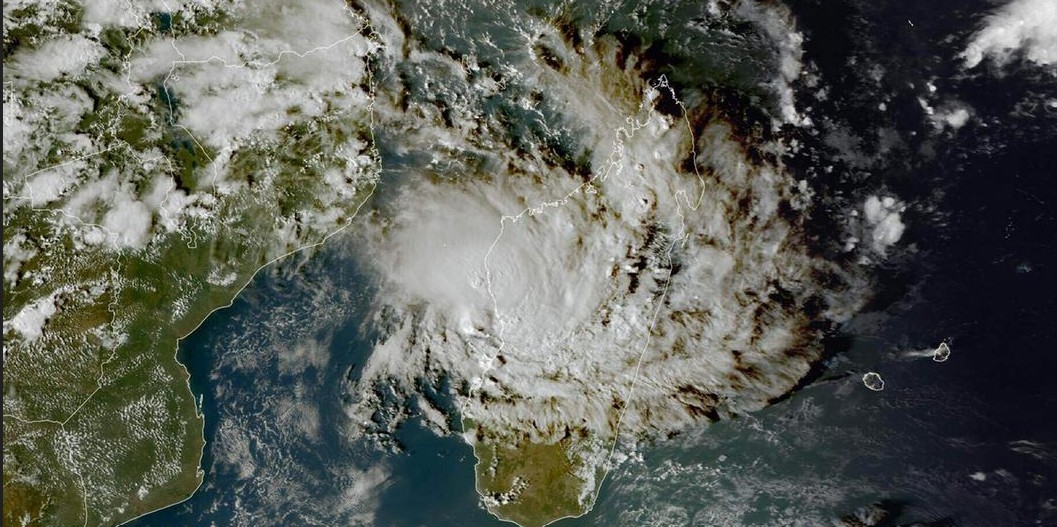
At least 6,000 children have been displaced and nearly 29,000 left without access to school in Madagascar following Tropical Cyclone Gezani, which struck the eastern coast on February 10, 2026, with winds exceeding 200 km/h, UNICEF warns.
This was the second major cyclone to hit the country in just two weeks, following Cyclone Fytia, compounding an already critical humanitarian crisis.
The hardest-hit areas include the Atsinanana region, particularly Toamasina, Madagascar’s second-largest city and main port.
Thousands of families have been forced into overcrowded shelters, exposing children to protection risks such as family separation, violence, exploitation, and psychological trauma.
“Many families have lost their homes, which turns into a deeply distressing experience for children.
The cyclone has also disrupted essential services they rely on, including safe water, healthcare, protection, and schooling.
UNICEF is working with the Government to restore these services as quickly as possible to reduce further risks for children in the weeks ahead, but we need support and funding urgently,” said Christine Jaulmes, UNICEF Representative in Madagascar.
The cyclones have also damaged critical infrastructure. Both university hospitals and 21 health centres were affected, including vaccine cold-chain disruptions, restricting access to lifesaving care.
Education has been heavily impacted: 35 schools were damaged, 563 classrooms lost their roofs, and 218 were destroyed, leaving many children without a safe place to learn.
Emergency response efforts are being led by the Government of Madagascar through the National Bureau for Risk and Disaster Management (BNGRC), with UNICEF and other partners providing support.
Water purification supplies, WASH kits, mosquito nets, and emergency health kits covering 60,000 people have been distributed.
Temporary learning spaces are being established for up to 14,000 students, and outreach teams are helping families access child protection services.
Public awareness campaigns are informing communities about hygiene, nutrition, and child safety.
Early response was made possible by nearly US$900,000 (about Sh116.1 million) from the Central Emergency Response Fund (CERF).
UNICEF is now appealing for US$8.4 million (about Sh1.084 billion) to scale up life-saving assistance and support early recovery for children and their communities.
Meanwhile, the Southern African Development Community (SADC) has deployed its Emergency Response Team (ERT) to support Madagascar’s government in coordinating relief efforts, including search and rescue, emergency health services, geospatial analysis, and technical support for humanitarian response.
The deployment is part of SADC’s broader mandate to provide regional solidarity and technical assistance to member states facing natural disasters. The teams will operate in Madagascar from February 16 to 28, 2026.
Do you want to send us a story? SMS or Call +256-787-551-001 or WhatsApp +256-770-450-528 or Submit on on email eetoilnewsdesk@gmail.com
